


Easy Access to the Easy Rider Bus
Helping passengers in an active retirement community find relevant bus information.
.png)
Overview
The Easy Rider bus is a free transportation system within Laguna Woods Village, an active retirement community.
The goal of this project was to discover the experiences and challenges residents face while navigating the Easy Rider bus system and design a solution.
Role & Duration
User Research, Prototyping, UI Design
November 2025 - March 2026

🔎 User Research
The Easy Rider is a free bus transportation system within Laguna Woods Village, an active retirement community, available exclusively to residents. It allows them to travel from stops within the neighborhood to local shopping destinations, appointments, Village events, and more. The main bus stop is in front of Clubhouse 1, a central point for social activities. This location serves as both a starting point and a transfer point for all residential buses in Laguna Woods.
Research Questions
I wanted to answer the following questions:
- What informal rules and social norms exist between people on the Easy Rider bus?
- What experiences and challenges do new residents face while navigating the Easy Rider bus system?
Methodology
Observational Study
%20(1).jpg)
I conducted multiple observations (totalling 3 hours) at the central bus stop. This was done to help me explore the social dimensions of the Easy Rider bus system, as well as the experiences of new residents navigating the bus system.
User Interviews
“They [other residents] keep telling me, just get on the bus and ask the bus driver.” — Participant 4
Semi-structured interviews were conducted with four residents of Laguna Woods— three passengers and one non-passenger. These were done to gain a deeper understanding of the social norms that exist between people on the bus, as well as the challenges new residents face when navigating the bus system.
Contextual Inquiry Models
I developed three Contextual Inquiry Models based on the previous data collected with the following intentions:
- Flow Model: To reveal the organizational structure and coordination between bus drivers, the GRF (resident services), new residents, and bus drivers.
- Identity Model: To demonstrate the sources of pride, values, and desires of bus riders.
- Physical Model: To show the layout of the Clubhouse 1 bus stop and how residents move throughout the space, revealing opportunities for improvement.
💡Insights
🚌 Bus Drivers
- New residents rely on Bus Drivers for bus route information due to a lack of bus stop signage and an overwhelming bus information packet
- Bus drivers are a core part of the experience for residents as they build trust through daily conversation and mobility assistance
👥 Social Norms
- There are underlying, unspoken social norms such as greeting and thanking the bus driver
- Residents are heavily judged if this norm is not followed
- Residents use regular benches, rather than bus stop benches, because they provide shade and opportunity for social interaction
ℹ️ Information Architecture
- Lack of bus stop signage + a bus info packet with overwhelming amounts of information causes confusion for new residents
- This leads to new residents giving up on the bus system until it's a necessity for them to get around
🎯 Problem Statement
How might we help passengers of the Easy Rider Bus System in Laguna Woods Village find relevant bus information in an easy and accessible way?
🧠 Define
After finding the core opportunity, I created two Empathy Maps (Passenger & Bus Driver) and one User Journey Map to dig deeper into user wants, needs, and system friction points to find my design focus:
Passengers of the Easy Rider Bus System in Laguna Woods Village need a way to easily access real-time, personalized bus information in order to feel confident using the bus.
🛠️ Prototype
.png)
.png)
.png)
.png)
.png)
.png)
.png)
I started by creating low-fidelity wireframes using Balsamiq to explore the structure of an app that could provide residents with the information they need. These were reviewed by my classmates and given peer feedback. If I had more time with this project, I would have utilized these for usability testing.
✨The Solution
.png)
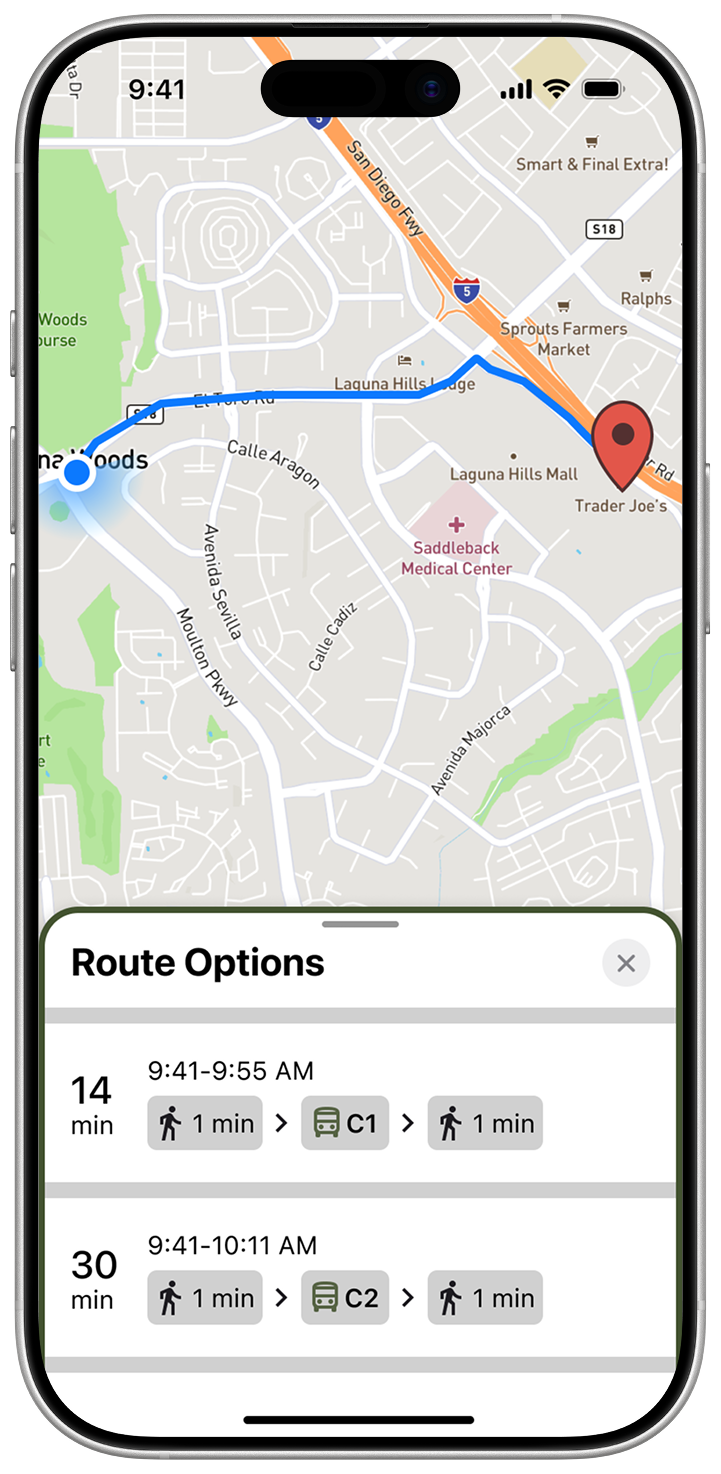
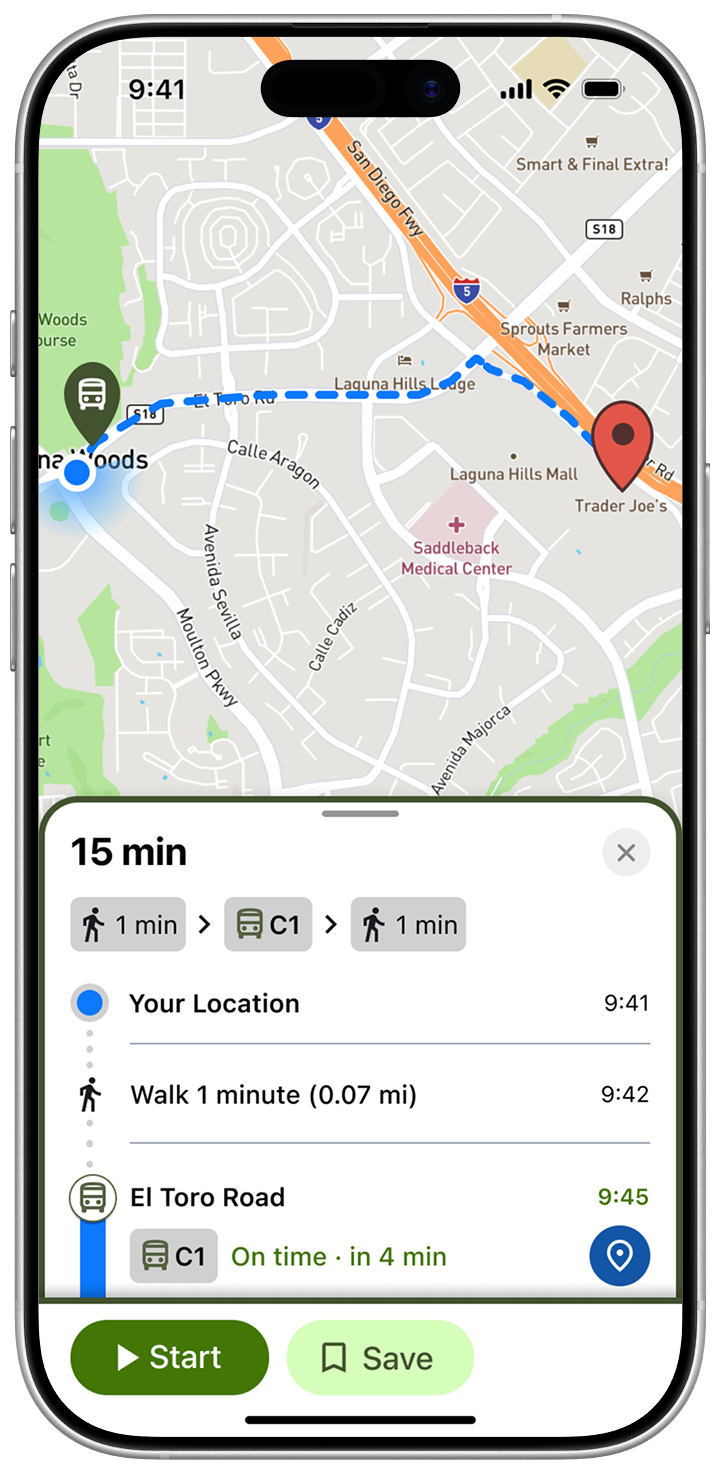
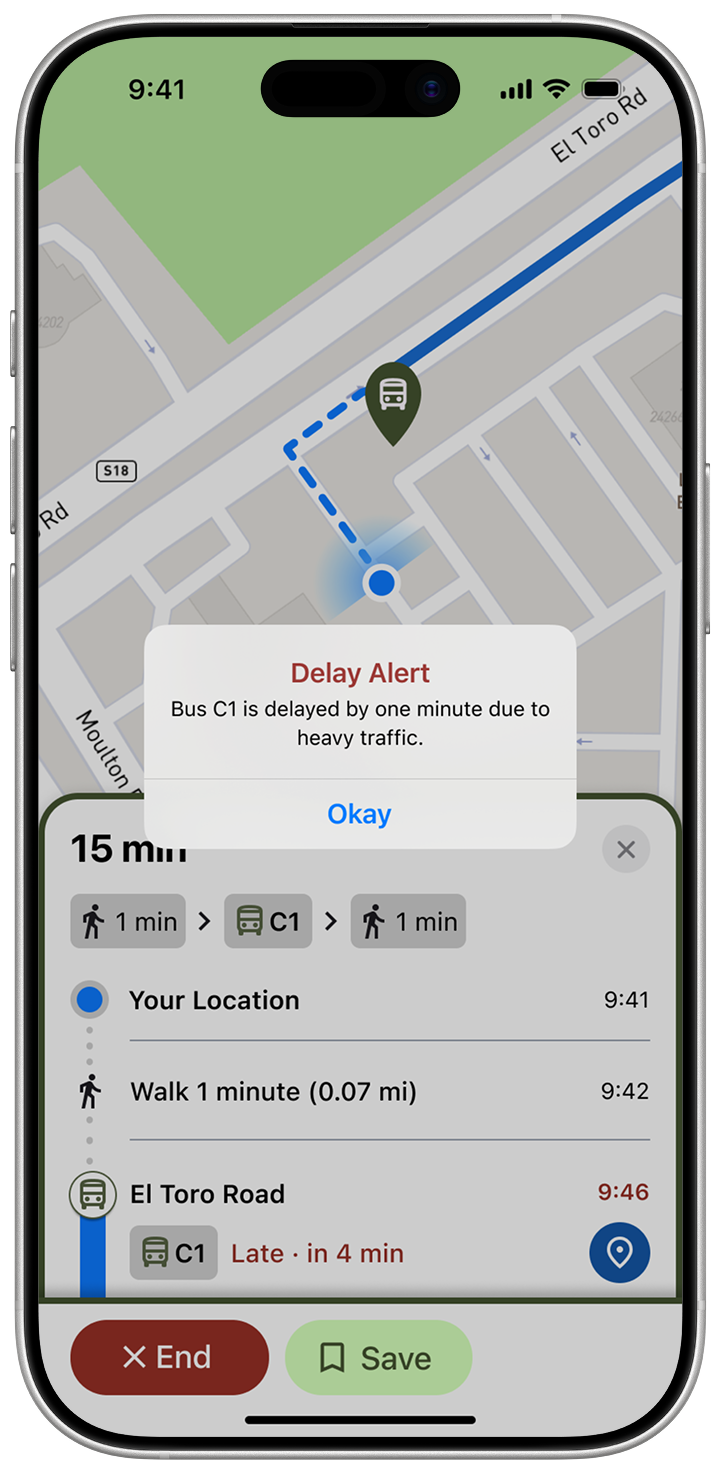
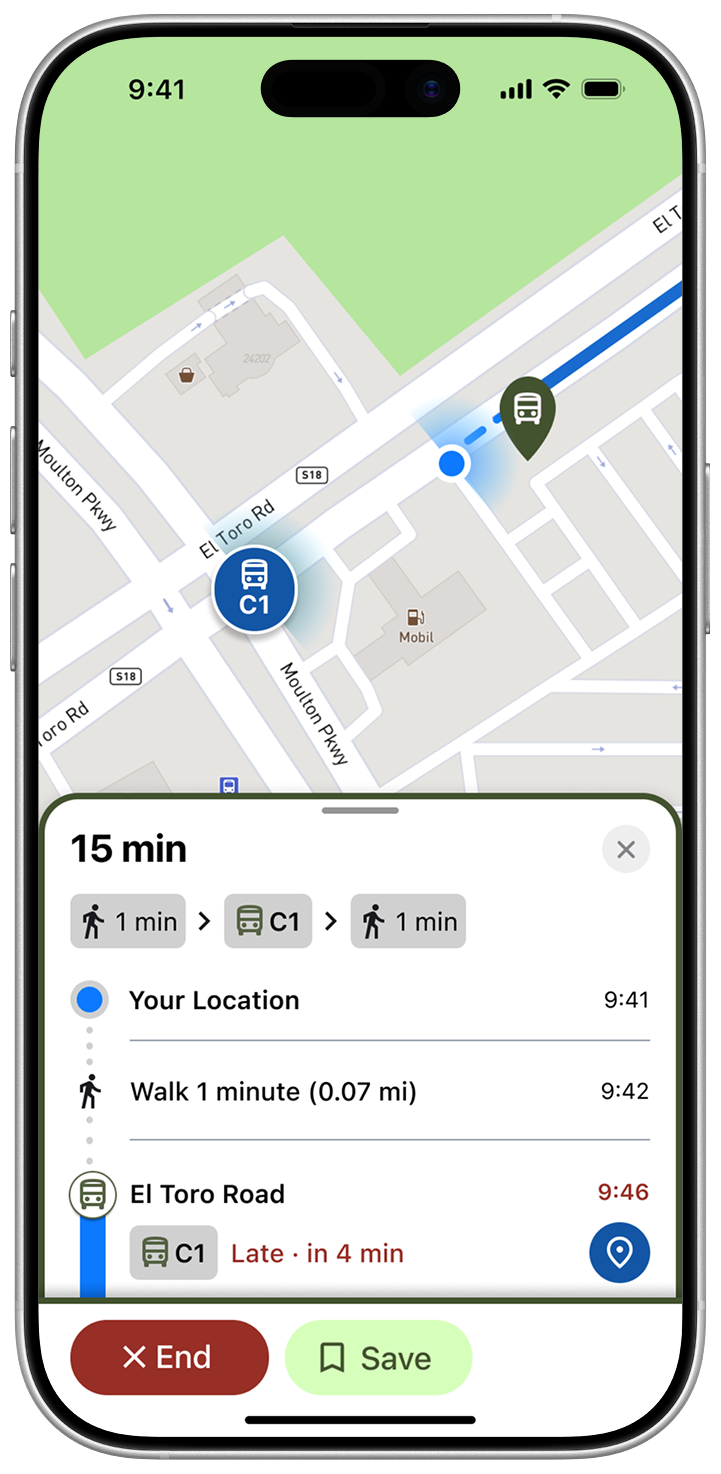
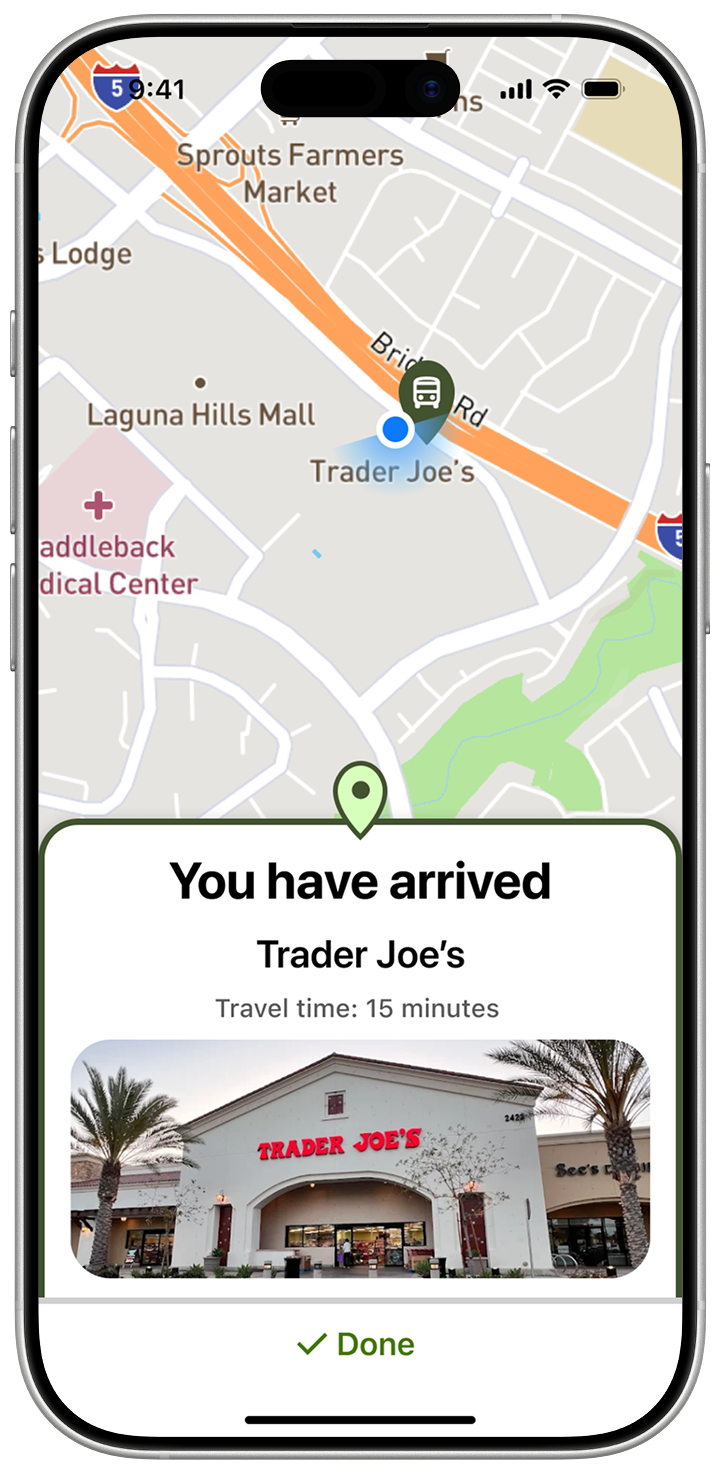
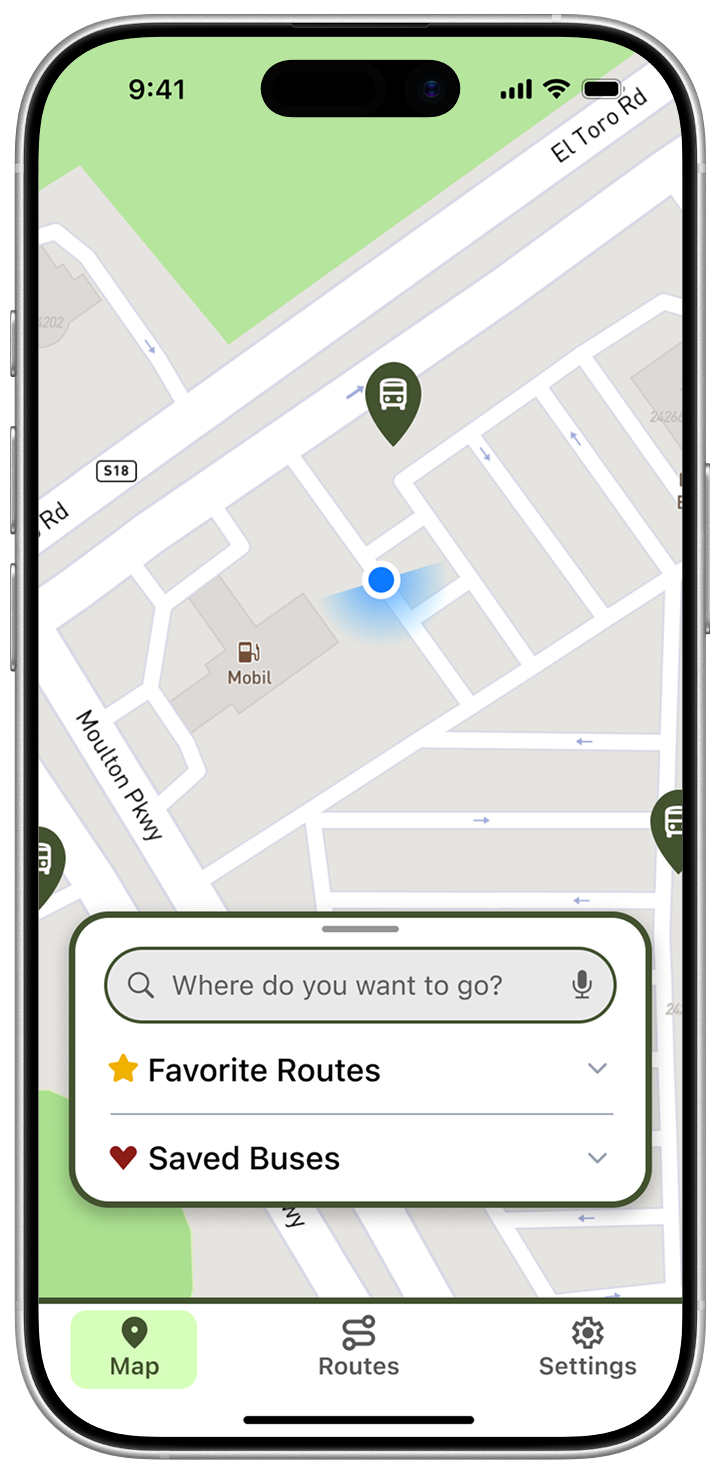
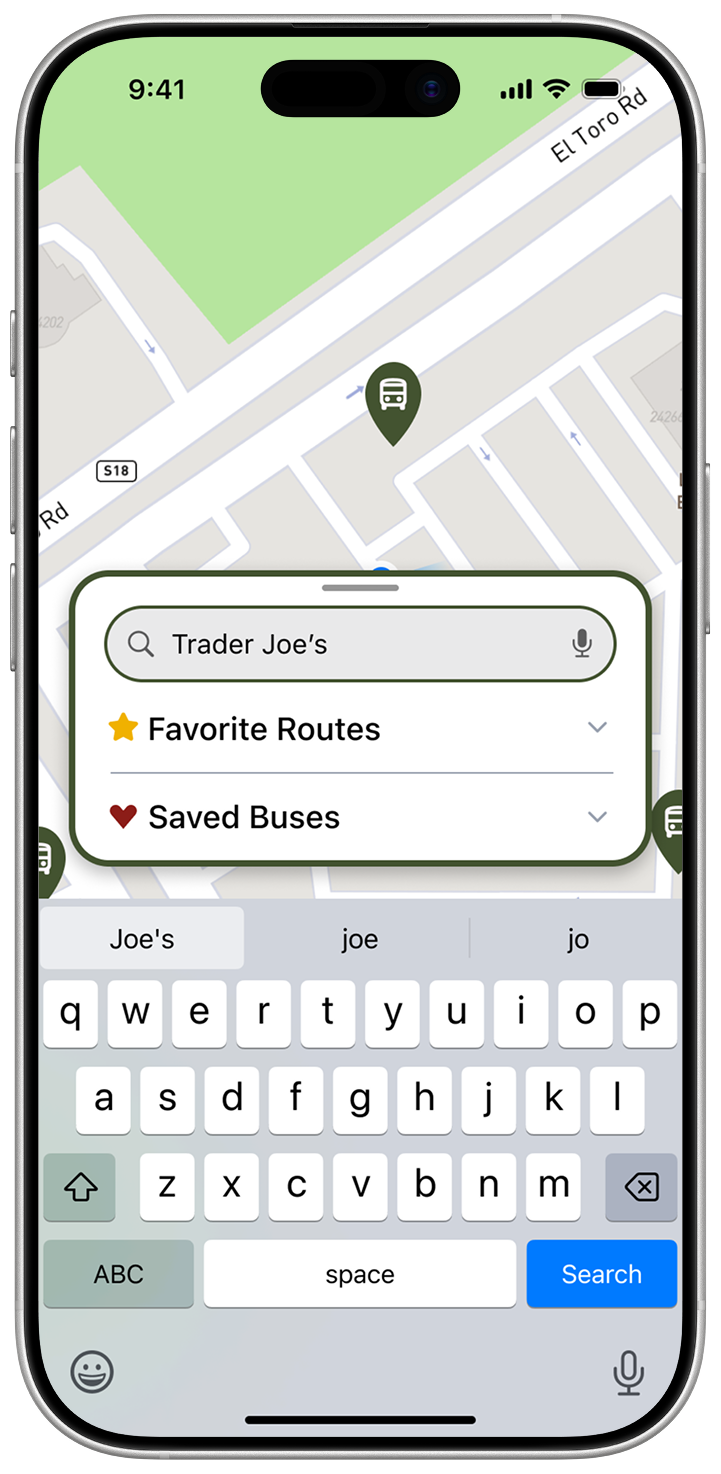
The final design (made using Figma) is an app residents can use to find the bus information they need, whether that be directions to their local bus stop, tracking their favorite bus, or finding a route to their destination.
Experience the high fidelity prototype yourself here.